
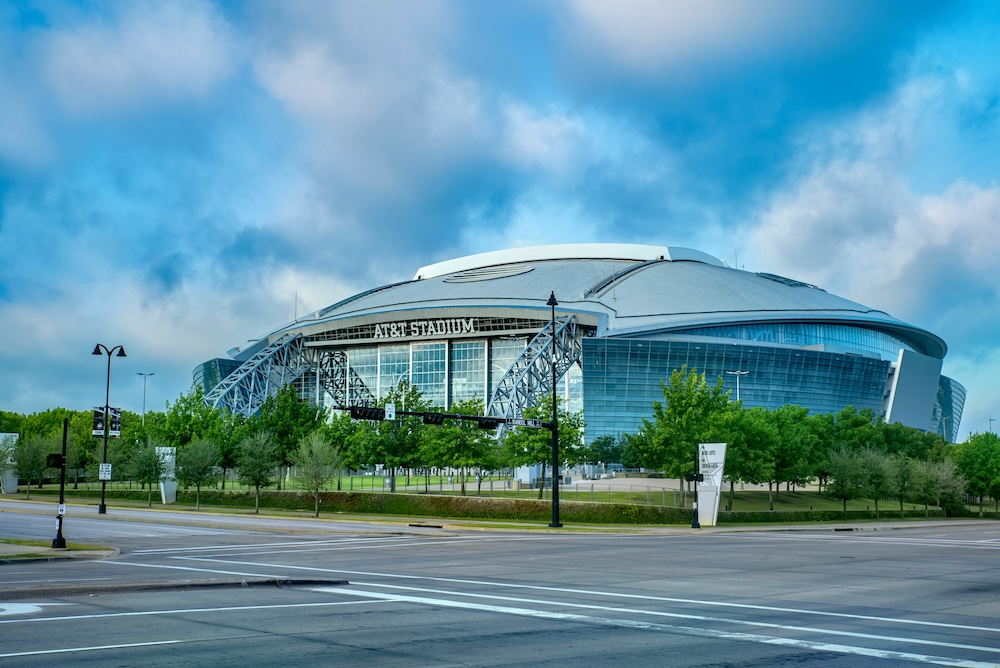
AT&T Stadium in Arlington is often described in terms of size and spectacle, but for football fans its real significance at the 2026 World Cup lies in how it will shape the matches played inside it. As a huge, enclosed, retractable-roof venue that has been transformed from NFL turf to a purpose-built natural-grass pitch, “Dallas Stadium” will create a specific tactical environment that you can see clearly if you follow full games rather than just highlights.
Why AT&T Stadium Matters For World Cup Match Dynamics
Completed in 2009 as a vast steel-and-glass arena, AT&T Stadium is one of the largest venues in the tournament, with reported capacities ranging from around 65,000 for FIFA configurations to over 100,000 for American football events. During the World Cup it will be branded as Dallas Stadium and is scheduled to host more matches than any other single venue, making its pitch, roof and atmosphere central to how the tournament looks on screen. For viewers, that means understanding the Dallas environment is crucial if you want to interpret pressing intensity, tempo changes and xG patterns with the right context.
From Turf To Tournament Grass: The Transformation Under The Roof
To meet FIFA’s requirement that all 104 matches be played on natural grass, AT&T Stadium has undergone a complete pitch rebuild, replacing its familiar artificial turf with a new grass surface grown specifically for the World Cup. The field, grown in Colorado and transported to Arlington, sits on a layered system of soil, drainage, air circulation and temperature control, supported by an array of LED grow lights suspended above the pitch to compensate for the lack of natural sunlight inside the enclosed bowl. For viewers, this setup should produce a fast yet stable surface, where first touches, quick combinations and precise finishing are more likely to reflect technical and tactical quality than random bobbles or uneven patches.
How The Retractable Roof And Enclosed Bowl Affect What You See
AT&T Stadium’s roof, carried by two massive arches, allows the venue to operate as a fully enclosed environment while still offering flexibility for different events. In World Cup mode, the largely enclosed bowl reduces wind and protects the pitch from external weather, which stabilises aerial ball flight and creates a more consistent climate regardless of Texas heat outside. For live viewers, this means that long diagonals, high crosses and chipped passes should behave more predictably than in open-air stadiums, putting a premium on teams’ technical execution and tactical planning rather than on their ability to adapt to swirling gusts or sudden rain.
Using ดูบอลสด To Understand How Dallas’ Stadium Shapes Matches
The best way to see how AT&T Stadium affects football is to watch full matches with a conscious focus on the interaction between the environment and the game. When you commit to ดูบอลสด from kick-off, you can track how the ball rolls on the newly laid grass, whether players adjust their movement patterns in different zones, how quickly they recover between sprints under the stadium’s climate control, and how crowd noise inside the enclosed bowl influences pressing surges or hesitations in build-up. Over several games, you begin to recognise a distinct “Dallas feel”: perhaps slightly faster ball circulation than in older venues, or more consistent high-tempo phases because weather and wind are removed from the equation.
Checklist For Watching A World Cup Match At AT&T Stadium
Because the stadium’s influence is subtle rather than obvious, having a simple checklist in mind when you watch helps you link what you see on screen to the environment in Arlington. Instead of attributing every misplaced pass or drop in tempo to mentality, you can parse which elements stem from tactical choices and which are logical responses to the stadium’s specific conditions. The following sequence offers a structured way to observe.
- In the first 10–15 minutes, watch the speed and consistency of ground passes, especially in central congestion.
- Pay attention to how high and often both teams press, and whether that intensity is maintained or fades across each half.
- Track the trajectory of long balls and crosses to see how the enclosed bowl affects aerial deliveries.
- Observe players’ footing when turning or accelerating, particularly near the touchlines and penalty areas.
- Compare the sharpness of late-game sprints and recovery runs with earlier phases to gauge how the controlled climate affects fatigue.
When you revisit these observations alongside xG maps and shot locations, you can better explain why chance quality spiked in certain periods or declined late on. A sudden flurry of high-xG chances might coincide with a tactical change that used the full width of a flawless surface, while a drop in pressing could reflect accumulated fatigue in a stadium where the game’s tempo had been high for long stretches.
Table: AT&T Stadium’s Key Features And Tactical Implications
Summarising AT&T Stadium’s main structural and environmental traits in a table helps connect stadium facts to the match behaviours you should expect to see. This turns abstract architectural details into practical cues for how to watch World Cup games in Dallas.
| Stadium feature | Detail at AT&T / Dallas Stadium | Tactical implication for viewers to track |
| Capacity and scale | Approx. 65,000–70,000 for FIFA; can exceed 100,000 | Intense, enclosed noise may boost pressing and emotional swings |
| Roof and enclosure | Retractable roof, largely enclosed steel-and-glass bowl | Minimal wind; stable aerial passes and crosses |
| Playing surface | New natural-grass pitch grown off-site, high-tech upkeep | Fast, true roll; supports quick combinations and sharp changes |
| Climate separation | Indoor-like conditions despite Texas heat outside | Potential for sustained tempo and fewer weather-driven slowdowns |
| Multi-use transformation | From NFL turf to FIFA grass with grow lights and sensors | Watch for consistency and how pitch holds up over the tournament |
If you watch with these features in mind, you can anticipate certain match types. High-pressing teams may find Dallas ideal for compressing play and forcing turnovers on a reliable surface, while sides relying on chaos from bad weather or uneven pitches may discover fewer external variables to disrupt better-organised opponents. That awareness helps you judge whether a performance in Dallas reflects a team’s true level or is partly tailored to the stadium’s neutral, technically friendly environment.
How Dallas’ Giant Bowl Fits Into FIFA’s Wider Grass And Stadium Strategy
AT&T Stadium’s transformation is part of a wider project in which FIFA and local organisers have rebuilt playing surfaces across multiple North American NFL venues, using years of research on turf blends, player safety and field consistency. In Dallas, that has meant constructing the pitch from the concrete base up, embedding advanced irrigation, air systems and LED grow lights to maintain grass quality in an enclosed space that normally sees none of the natural sunlight typical football grounds rely on. For viewers, this context explains why pitches in the U.S. cluster of stadiums may look and behave similarly, making tactical choices, player movement and finishing quality the primary drivers of xG and outcomes rather than surface quirks.
Conditional Scenarios For Matches At AT&T Stadium
Given its scale and controlled conditions, AT&T Stadium could host several distinct match patterns depending on the coaches and stakes involved. In group-stage games between proactive teams, you might see high-tempo, pressing-heavy contests where the reliable surface and stable environment encourage risk-taking in both build-up and counter-pressing, often producing a healthy volume of shots and relatively high combined xG. In knockout rounds, the same conditions could yield more cautious, positional battles, with teams using the full width of the immaculate pitch to probe patiently and relying on a few carefully crafted attacks or set-piece routines to create high-quality chances rather than chasing volume. Recognising which scenario is unfolding as you watch allows you to calibrate expectations and critique game plans fairly in light of what Dallas’ giant bowl makes possible.
Summary
AT&T Stadium’s spectacular scale and engineering are impressive, but for the 2026 World Cup the key question is how its enclosed design, new natural-grass pitch and controlled environment will shape the ลิงค์ดูบอลสด changy you see. By understanding its roof, surface and capacity—and by watching matches there with a structured focus on ball behaviour, pressing patterns and chance quality—you can interpret both live performances and post-match xG data from Dallas with far greater accuracy. That perspective turns every World Cup game played under the AT&T roof into a detailed case study in how modern stadium design interacts with elite tactical ideas on the biggest stage.