
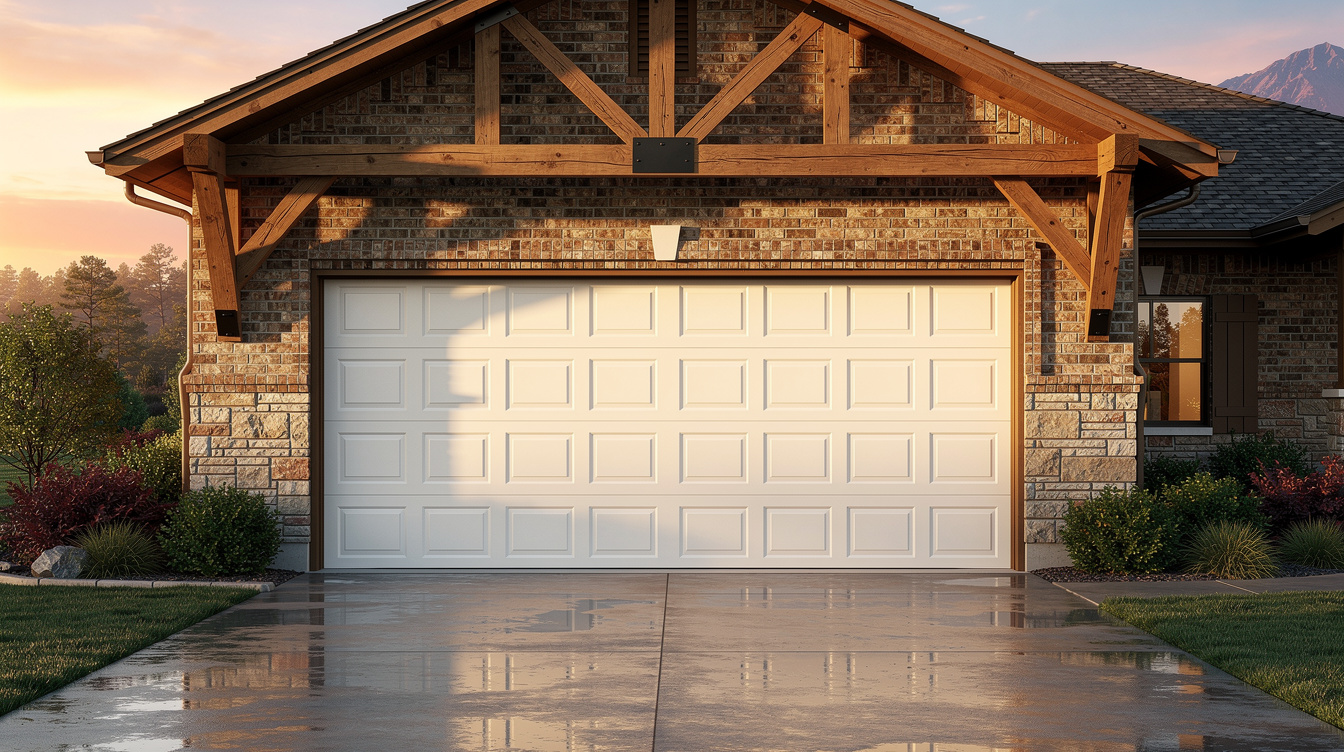
The garage door is the largest moving object in most homes and often the single biggest element of the front elevation. It gets used several times a day, every day, for decades. Homeowners still tend to spend more time choosing a kitchen faucet.
Part of that is because the door only becomes interesting when it stops working. By then the decision is being made in a hurry, usually from whatever the first contractor happens to stock. Here is what is worth understanding before you are in that position.
Material Sets the Baseline
Nearly everything else follows from this choice.
Steel is the most common option for good reason. It is durable, available in a wide range of styles and finishes, and works with insulation. Thickness matters: a thinner gauge dents more easily, which is worth thinking about if the door faces a basketball hoop or a driveway where kids play.
Wood looks better than anything else and asks for more in return. It needs refinishing on a schedule, it responds to humidity swings, and it costs more up front. On the right house it is worth every bit of that.
Composite and fiberglass aim for the look of wood with less upkeep. Quality varies widely between manufacturers, so this is a category where reading the warranty carefully tells you more than the brochure does.
Aluminum and glass suit contemporary architecture and let light into the garage. They are lighter than steel, which affects the hardware and spring system, and full-view glass sections are a different conversation about privacy and heat gain.
Insulation Depends on How You Use the Space
Insulation is where advice gets given badly in both directions, because the honest answer depends on your situation.
If the garage is detached and used only for parking, insulation buys you very little beyond a quieter door. If it is attached to the house, shares a wall with a living space or a room above, or gets used as a workshop, gym, or storage for anything temperature sensitive, it changes the space meaningfully.
Construction matters more than the number on the label. A single-layer door is a sheet of material. Double-layer adds insulation behind it. Triple-layer sandwiches insulation between two skins, which produces a door that is quieter, more rigid, and more resistant to denting. In hot climates, the reduction in heat transfer into an attached garage is often more noticeable than any winter benefit.
The Spring System Is the Part That Matters Most
Springs do the actual work. The opener only guides a door that the springs have already balanced, which is why a properly balanced door can be lifted by hand with modest effort.
Torsion springs mount on a shaft above the opening. Extension springs run along the tracks on either side. Torsion systems generally last longer, operate more smoothly, and are considered the better setup on most modern doors.
The part to take seriously: these springs hold an enormous amount of stored energy, and a spring that fails or is handled incorrectly can cause severe injury. This is the one component of a garage door that is genuinely not a homeowner project, regardless of what a video suggests. Replacement requires specific tools and training.
When getting quotes, ask about spring cycle rating. A higher-cycle spring costs somewhat more and lasts considerably longer, which for a door opened several times daily is usually the easy call.
Openers: Three Types, Different Jobs
Chain drive is durable and cost-effective, handles heavy doors well, and makes noticeably more noise. Fine for a detached garage, less pleasant under a bedroom.
Belt drive runs quietly and suits attached garages or any setup where the door operates near living space. It costs more and the difference is obvious the first time it runs at six in the morning.
Jackshaft openers mount on the wall beside the door rather than on the ceiling. They free up overhead space, which matters for high ceilings, storage racks, or car lifts, and they suit unusual configurations well.
On features, battery backup is worth having anywhere power outages are common, since it is the difference between opening the door and not. Smart connectivity that lets you check whether the door is closed is one of those additions people are skeptical about until they have it.
Safety Features Are Not Optional
Residential openers made since the early 1990s are required to include automatic reversal and photo-eye sensors that stop and reverse the door when something crosses the opening. If you have an older opener without them, replacing it is a safety matter rather than an upgrade.
Test the reversal function periodically. Place a solid object on the floor in the door’s path and confirm the door reverses on contact, and check that the photo eyes are aligned and unobstructed. If either fails, stop using the door until it is serviced.
The Return Is Better Than People Expect
Installing a new garage door is one of the few home projects that delivers on several fronts at once. It changes how the house reads from the street more than almost any comparable spend, it improves security where an older door has failing hardware or an outdated opener, and it can noticeably affect the comfort of an attached garage.
Curb appeal is the part that is easy to underestimate. On many homes the door occupies a third or more of what you see from the street. A dated door drags down an otherwise well-kept exterior, and replacing it changes the impression immediately.
What to Ask Before Hiring
- Are you licensed and insured, and can I see current documentation?
- What is the warranty on the door, on the hardware, and on your labor, separately?
- What cycle rating are the springs you are quoting?
- Does the quote include hauling away and disposing of the old door?
- Will you reuse any existing hardware, and if so, which parts?
- Do you handle any permit requirements, and are there local wind load or code considerations?
Get more than one quote and compare what is actually included rather than the headline number. A lower price that reuses old tracks and low-cycle springs is not the same job.
A Little Maintenance Goes a Long Way
Doors fail early mostly from neglect. A few times a year, look over the rollers, hinges, and tracks for wear or debris, lubricate the moving metal parts with a product intended for garage doors rather than a general household spray, check that the door is balanced, and test the safety reversal. Listen for changes too, since new grinding or banging is usually a small problem announcing itself before it becomes a large one.
None of that takes long, and it is the difference between a door that lasts its expected life and one that does not.